


25.10.25
Underpinning vs Foundation Repair: How to Choose The Right Option for Your Home?
What is Underpinning?
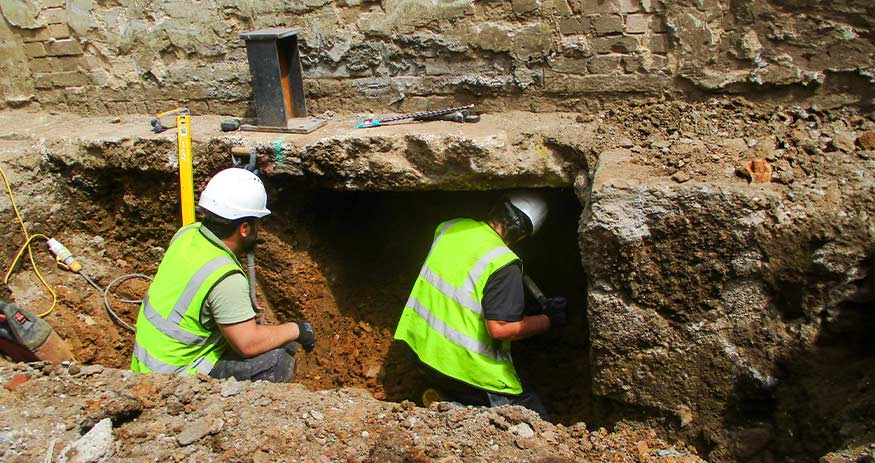
Underpinning a building strengthens or stabilizes its foundation by extending support below the existing foundation to reach a stronger soil level. This addresses problems caused by soil movement and settling. The process involves digging beneath the existing foundation using methods like concrete piers, steel beams, and helical piles.
When Should Underpinning be Used?
- Soil below the foundation has shifted or become unstable
- Existing foundation has settled or cracked
- Expanding or modifying an existing building with additional floors
What is Foundation Repair?
Foundation repair addresses minor structural problems without requiring deep excavation. Common methods include crack repairs, slab jacking, and piering.
When is Foundation Repair Needed?
- Small cracks or leaks in the foundation
- Slight uneven foundation settlement
- Moisture sealing and waterproofing needs
How to Decide Which is Best for Your Home
- Damage Severity: Major cracks and settlement indicate underpinning; minor issues suggest repair suffices.
- Root Cause: Soil instability benefits from underpinning; direct damage like leaks may only need repair.
- Budget Considerations: Underpinning requires excavation and heavy machinery; foundation repair is more cost-effective for minor issues.
- Future Plans: Construction expansion typically requires underpinning for added structural support.
When to Consult an Expert
Professional assessment determines the appropriate solution. A professional will inspect your foundation, discover the reasons for the problem, and give you options for solutions.