


03.11.26
How to Prevent Basement Flooding in Toronto Homes
Basement flooding can turn a useful part of a Toronto home into an expensive repair project in a matter of hours. Water may enter through foundation cracks, basement windows, overwhelmed drainage systems, failed sump pumps, or sewer backups. In older downtown properties, the problem can be more complicated because foundations, drains and grading may have been built decades before modern basement living became common.
The risk is not limited to homes that have flooded before. According to the City of Toronto’s basement flooding guidance, homes can be vulnerable during heavy rainfall or rapid snow and ice melt. Municipal sewer systems may become overwhelmed, while rainwater collecting around a foundation can enter through cracks, windows, or deteriorated drainage systems.
Preventing basement flooding therefore requires more than applying sealant to a visible leak. The best approach is to understand where water is coming from and create several layers of protection. For some homes, that means correcting grading and extending downspouts. For others, it may involve drainage improvements, a backwater valve, sump pump, foundation repairs, or professional basement waterproofing.
Why Basement Flooding Happens in Toronto Homes
A flooded basement does not always mean the same thing from one property to another. Two neighboring houses can experience completely different problems during the same storm because their foundations, plumbing, grading, and drainage systems are configured differently.
The City of Toronto explains several common causes of basement flooding. Surface water may enter because of poor lot grading, foundation cracks, leaking basement windows, overflowing eavestroughs, or inadequate downspout drainage. Groundwater may also enter when the home’s foundation drainage or weeping tile system is blocked, damaged, or unable to cope with the amount of water surrounding the foundation.
Sewer backup creates another potential pathway. During intense rainfall, excessive water entering the drainage network can contribute to overloaded sewers. Damaged private sewer laterals, blockages and tree-root intrusion can also prevent wastewater from leaving a property properly.
Toronto homeowners should therefore think about three broad sources of basement water:
- Overland water: Rain or melting snow moves across the ground towards the home.
- Groundwater and seepage: Moisture enters through foundation cracks, joints or other below-grade openings.
- Sewer backup: Water or sewage reverses direction through connected plumbing.
These problems can occur simultaneously. Poor grading, for example, may increase the volume of water around the foundation while an aging weeping tile system struggles to remove it.
Research from the University of Waterloo’s Intact Center on Climate Adaptation shows how widespread relatively simple flood vulnerabilities can be. Assessments of more than 500 homes found that, among the Ontario homes examined, 78% had downspouts discharging less than two meters from the foundation and 69% had grading that failed to properly direct water away from the house.
That is why basement flood prevention should often begin outside the home rather than only reacting to moisture once it reaches the basement.
Direct Rainwater Away From Your Toronto Home
One of the simplest ways to reduce basement flooding risk is to keep as much rainwater as possible away from the foundation.
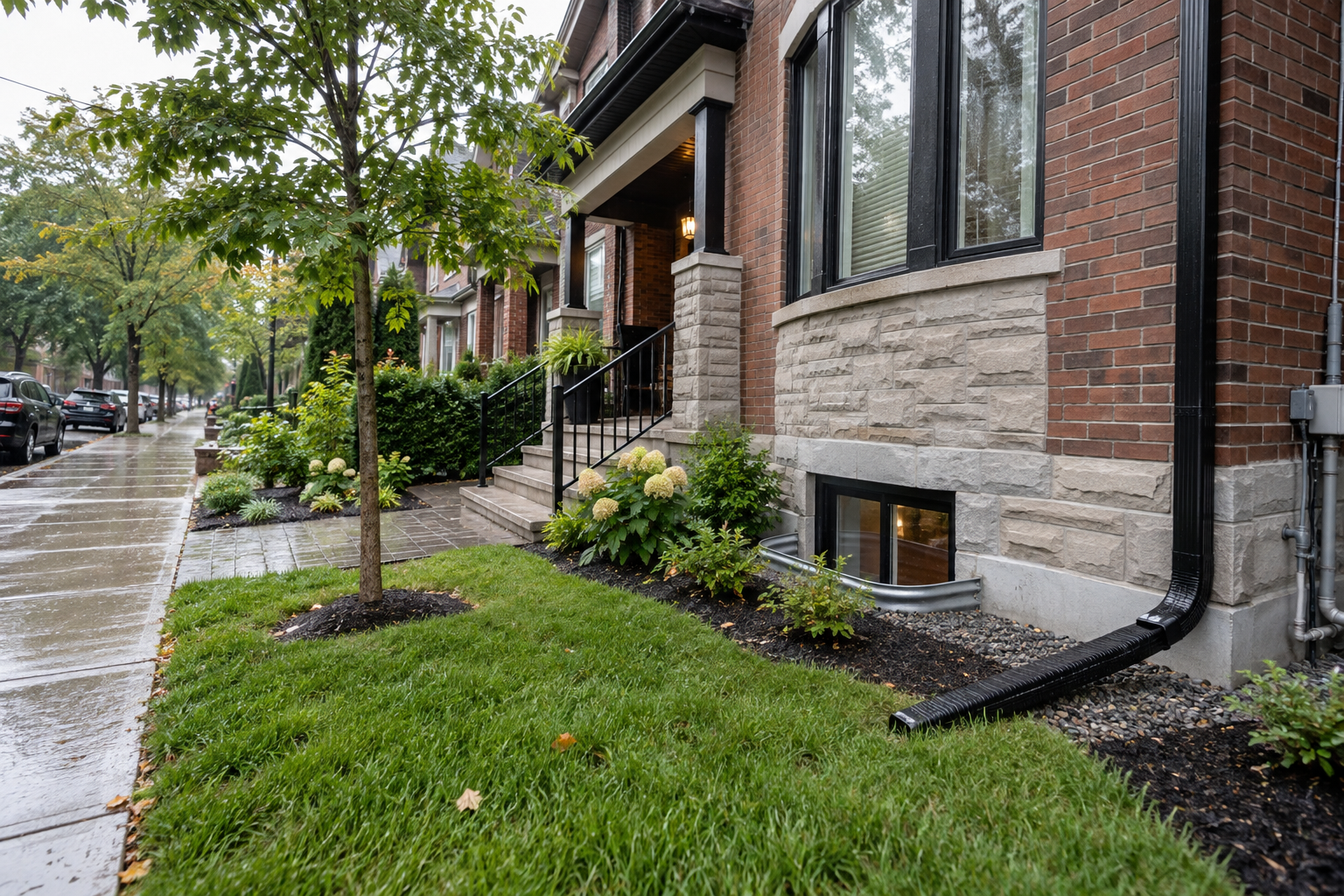
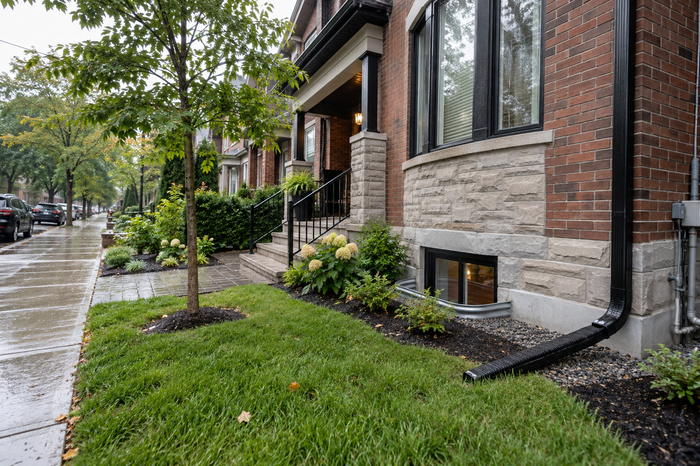
Start with the roof drainage system. Eavestroughs should be kept clear of leaves, ice, and debris so water can reach the downspouts instead of spilling over beside the house. Downspouts should then discharge at an appropriate location away from the foundation without creating drainage problems for neighboring properties.
The City of Toronto recommends directing downspout water at least two meters from the foundation where conditions permit. Homeowners should also maintain drainage swales and ensure outdoor drainage routes remain clear.
Lot grading is equally important. Soil, landscaping, or paving immediately beside the foundation should slope away from the house rather than creating a depression that funnels water towards it.
After heavy rainfall, walk around the property and look for:
- sunken soil along foundation walls
- water pooling beside the house
- overflowing eavestroughs
- blocked or disconnected downspouts
- low basement window wells
- clogged exterior drains
- water collecting around basement entrances
- snow piled directly against foundation walls
Window wells deserve particular attention. Toronto’s 2026 basement flooding prevention guidance recommends that window wells generally extend approximately 10–15 centimeters above surrounding grade while being properly sealed where they meet the foundation.
These simple changes matter because every liter of rainwater directed away from the building reduces the amount of water the foundation drainage and waterproofing systems need to manage.
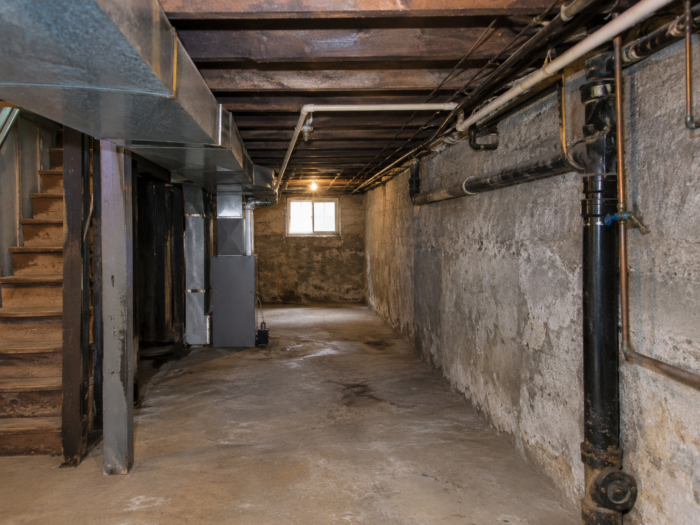
Inspect Foundation Cracks and Basement Waterproofing
Water appearing on a basement wall is evidence of a problem, but the wet location is not necessarily the original entry point. Water can travel behind finishes, along foundation walls, or through joints before becoming visible indoors.
Common warning signs include:
- damp patches after rainfall
- white mineral deposits on concrete or masonry
- peeling paint or finishes
- musty odours
- water staining around basement windows
- moisture where walls meet the floor
- visible foundation cracks
A small-looking crack should not automatically be dismissed. Its width, location, movement, and relationship to surrounding drainage conditions all matter.
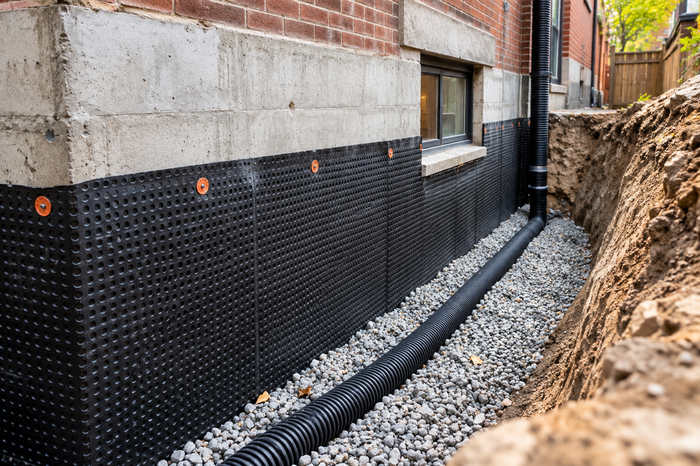
Professional basement waterproofing may involve different strategies depending on the source of the water. Exterior waterproofing addresses moisture before it penetrates the foundation, while interior drainage systems are designed to collect and control water from inside the basement.
A proper assessment may consider foundation condition, grading, hydrostatic pressure, weeping tile performance, and the age of the home’s existing drainage system.
| Flooding Risk | What You May Notice | Potential Response |
| Poor grading | Water pools beside foundation | Regrade soil or hard surfaces away from house |
| Foundation crack | Localized dampness or leaking | Assess and repair crack and surrounding foundation |
| Failed weeping tile | Wet lower walls or floor edges | Inspect or replace foundation drainage |
| Sewer backup | Water entering through basement drains | Assess plumbing and consider backwater protection |
| Sump failure | Rising water in sump pit | Repair pump and add backup protection |
| Window well problems | Water near basement windows | Improve drainage, sealing, and well height |
| Aging waterproofing | Recurring seepage after rain | Consider interior or exterior waterproofing |
For homeowners considering major structural work, drainage improvements may be especially practical when the foundation is already accessible. RockBottom can coordinate waterproofing measures with basement underpinning, including options such as weeping tile, sump systems, and below-slab moisture protection.
This is especially important when a basement will eventually contain drywall, insulation, flooring, and cabinetry that would be expensive to remove if water problems appear later.
Protect the Basement With Sump Pumps and Backwater Valves
Two of the most useful flood-protection devices in many Toronto homes are sump pumps and backwater valves. However, they solve different problems.
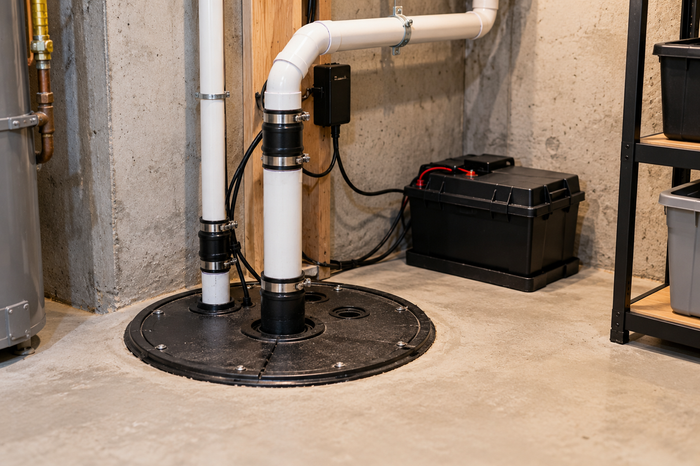
A sump pump removes water collected around or beneath the home’s foundation. Water flows into a sump pit and is pumped to an appropriate location outside.
Under Toronto’s Basement Flooding Protection Subsidy Program, sump discharge should generally be directed onto a permeable surface such as a lawn, garden, or gravel area at least two meters from the foundation where practical and without negatively affecting neighboring properties.
The sump pump should also be tested regularly. A pump that has not operated for months should not simply be assumed to work when the next major storm arrives.
Backup power is worth considering because severe storms can sometimes create two problems at once: large quantities of water and an electrical outage.
A detailed Intact Center Home Flood Protection Program report found that among assessed Ontario homes equipped with sump pumps, 85% did not have a backup pump and 84% lacked backup power.
A backwater valve performs a different job. It is intended to stop sewage from reversing through a home’s drainage connection when downstream conditions cause a backup.
Toronto recommends that homeowners inspect and maintain backwater valves regularly, including cleaning accessible components according to manufacturer instructions.
When a backwater valve closes during a sewer backup, residents should also avoid using household plumbing because wastewater from toilets, sinks, dishwashers, and washing machines cannot leave normally until the valve reopens.
Installation needs to be planned correctly. The City requires a permit for a backwater valve installation, so homeowners should work with qualified professionals rather than treating it as a simple DIY project.
Take Advantage of Toronto’s Basement Flooding Subsidy
Flood-protection improvements can represent a meaningful investment, but eligible Toronto homeowners may receive municipal financial assistance.
As of May 1, 2026, Toronto’s expanded Basement Flooding Protection Subsidy Program offers eligible owners of single-family, duplex, triplex, and fourplex residential properties up to $6,650 per property toward qualifying measures.
Current maximum subsidies for eligible work completed on or after November 12, 2025 include:
- up to $500 for a one-time home plumbing assessment
- up to $1,600 per backwater valve, to a maximum of two devices
- up to $2,250 for one eligible sump pump
- up to $300 for sump pump backup power
- up to $400 for eligible foundation drain or weeping tile severance and capping
The subsidy generally covers up to 80% of eligible invoiced costs, subject to individual category limits and current City requirements.
Homeowners should review the latest program conditions before beginning work because contractor licensing, permits, inspections, and downspout requirements can affect eligibility.
Research published in the Journal of Water Economics has also examined Canadian homeowners’ willingness to adopt property-level flood protection. The research found that financial incentives can influence decisions to install measures such as sump pumps and backwater valves, while homeowners’ perception of flood risk and confidence in the effectiveness of those measures also matter.
Toronto’s subsidy can therefore make it easier to address potential weaknesses before a severe rainfall event reveals them.
Plan Flood Protection Before Underpinning or Basement Renovation
Flood prevention becomes even more important when homeowners are investing in a finished basement, secondary suite, or basement lowering project.
An unfinished basement containing little more than utilities and storage may recover from a minor leak relatively easily. A renovated basement may contain flooring, cabinetry, drywall, insulation, electrical components, furniture, and appliances.
Preventing water intrusion before those finishes are installed is therefore much easier than removing them later.
If you are planning a basement renovation, drainage and waterproofing should be reviewed early in the project.
The same principle applies to basement underpinning and basement lowering.
Underpinning allows contractors to extend a foundation deeper while lowering the basement floor. Because excavation exposes parts of the foundation that may otherwise be difficult to reach, it creates an opportunity to coordinate structural improvements with new drainage, waterproofing, plumbing, and insulation.
A well-planned underpinning Toronto project may combine:
- structural assessment and engineering
- underpinning or excavation
- foundation repairs
- drainage and weeping tile improvements
- waterproofing
- sump and backwater protection where appropriate
- insulation and new slab construction
- optional radiant in-floor heating
- final basement finishing
This integrated approach is particularly valuable in older downtown Toronto homes where access is restricted and reopening completed work later can be disruptive and costly.
Whether a homeowner is planning basement underpinning in Toronto, structural underpinning, a secondary suite, or a complete renovation, water management should be part of the project from the start.
Maintain Your Flood-Protection Systems Every Year
Installing flood-protection equipment is only part of protecting a basement. Pumps, valves, drains, eavestroughs and exterior drainage features also require ongoing maintenance.
The University of Waterloo’s flood-protection research found significant maintenance gaps among inspected properties. More than half of homes with backwater valves had never maintained them, while a substantial proportion of homeowners with sump pumps had never maintained their pumps either.
A practical annual flood-prevention routine should include:
- cleaning eavestroughs in spring and fall
- checking downspout extensions
- testing sump pumps before heavy-rain periods
- inspecting backup power
- looking for new foundation cracks
- cleaning basement window wells
- keeping exterior drains unobstructed
- maintaining backwater valves
- checking whether soil has settled beside the foundation
Homeowners should also avoid putting fats, oils, grease, wipes, and other unsuitable materials into household drains. The City of Toronto’s flood-prevention recommendations specifically encourage residents to keep materials that can contribute to sewer blockages out of the drainage system.
Insurance coverage should also be reviewed rather than assumed. The Government of Canada’s guidance on overland flood insurance notes that flood coverage, limits, exclusions, and deductibles vary between insurers.
Basement flooding can affect more than direct repair costs. University of Waterloo research on households affected by basement flooding found lost working days and longer-term stress among homeowners following severe flood events.
Routine prevention is far easier than dealing with water removal, damaged building materials, and a lengthy restoration project.
Protect Your Toronto Basement Before the Next Major Storm
There is no single device that eliminates every basement flooding risk. Effective protection comes from understanding how water could enter a specific home and reducing those risks before they turn into an emergency.
Start outside by keeping eavestroughs clear, extending downspouts, correcting poor grading, and maintaining basement window wells. Inside, monitor the foundation, plumbing and drainage systems. Depending on the property, professional waterproofing, upgraded weeping tile, a sump pump or a backwater valve may provide additional protection.
If you are already planning basement underpinning Toronto, basement lowering, waterproofing or renovation work, coordinating these improvements can avoid reopening finished areas later.
RockBottom Underpinning specializes in complex residential basement projects across Toronto, including structural work, drainage, waterproofing and basement transformations. If you are dealing with recurring moisture, an aging foundation, or plans to create more usable space below grade, visit www.rockbottomunderpinning.com to request an assessment.
Addressing flood risk before the next storm is ultimately about identifying the weak points in the home, correcting them properly, and protecting the investment you have made in your Toronto property.